Decisions, decisions, decisions
The decision by Camelot to play Lotto with 59 balls instead of 49 in 2015 forced me to refocus my research. Everything became more complicated as a result. I had to redo many computer simulations to reflect the changes.
It is impossible to predict which numbers will be drawn in a game of Lotto, and more so now, which means we are right to be sceptical about any plan that purports to win Lotto.
Academics spurn such schemes since they tend to be based upon false assumptions, a poor understanding of probability and display shallow thought and dubious logic.
Potentially, many Lotto schemes are snares for the gullible.

Table of contents
Estimated reading time: 6 minutes
Avoid peddling misinformation
People who write books about winning Lotto are considered charlatans or self-deluded since they usually make unrealistic claims that they have not tested or tried. Also, they tend not to verify their claims since they cannot do so.
This attitude poses a problem since I have resumed writing my book. I must not peddle misinformation. Unfortunately, this was not the only problem!
Changes to Lotto
After remaining stable for 19 years, the National Lottery operator, Camelot, changed Lotto, which impacted my book’s structure profoundly.
- In October 2013, Camelot modified how the total prize fund should be distributed among the prize tiers and added raffle prizes. Most noticeably, the basic award for matching three numbers rose from £10 to £25.
- Two years later, Camelot amended Lotto to play with 59 balls instead of 49.
The latest changes have affected the game dynamics by making it much more difficult to win any prize – if we discount the free Lucky Dip ticket in a future draw for matching just two numbers[1].
Taking stock
I had based my work on the original game from the beginning.
Enhancing Lotto made changes necessary. After all, what would be the point of harping on about a game you can no longer play? Other than laziness and stubbornness on my part, how could I justify retaining the original structure?
What should I do?
I was in a quandary. On the one hand:
- I had accumulated a large body of historical data that applies to Lotto played with 49 balls, covering 2,065 draws.
- Many lotteries in the world still use 49 balls; some are similar to the UK National Lottery’s operation.
- It is a sound general principle in science and mathematics to study simple cases first and then progress to greater complexity in due course. i.e. Start by considering 49 balls, then move on to 59.
On the other hand, the game had changed irrevocably. The two versions are distinct.
Weighing the pros and cons, I decided to retain much of the original structure. I could serve both camps through modification rather than replacement. There would be benefits and no need to ignore or reject insightful discussions. At any point, the context should make clear which version of Lotto is being considered.
More questions than answers
Should I accept the received wisdom without challenge and close my mind to new ideas? Or whatever structure I adopted, should I follow up on my thoughts several years ago and see how far I could take them by conducting scientific experiments?
There were some critical questions for me to consider:
- Would it be possible to devise a successful scheme to win prizes in Lotto that would not lead to financial ruin under any circumstances?
- Might there be a partial solution to improve on those published to date?
- What have others achieved? How have they succeeded? In what ways have they failed?
- Is the solution I am attempting limited by a lack of knowledge, data or understanding?
- Are there valuable insights?
Back to basics
When I began researching and writing my book, I was determined to make no claims without proper and thorough testing with verification.
In my opinion, the following steps were essential:
- Study and analyse the problem in depth.
- Acquire background information and gather pertinent data.
- Assess the relevance of both by reviewing and sifting.
- Build hypotheses.
- Design and conduct experiments to test the hypotheses.
- Draw conclusions.
- Where necessary and appropriate, review and repeat the experiments after revising them.
Finally, how could I test the viability of any solution qualitatively and quantitatively? Could I devise some measures of goodness which would provide benchmarks to compare systems with each other for efficacy?
Only when these steps have been followed dutifully and diligently will I consider my efforts worthy of being considered seriously.
How might I achieve my goal ultimately?
Fortunately, the costs of this kind of research are not prohibitive. You do not need costly equipment – only time, dedication, ingenuity, peace and quiet, and a personal computer.
Excel and Word from Microsoft Office have played their parts – in analysis and word processing, respectively.
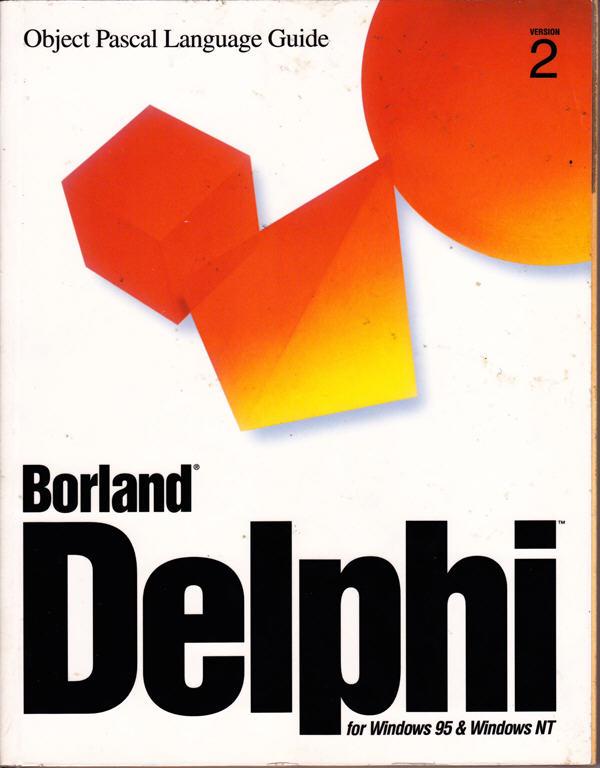
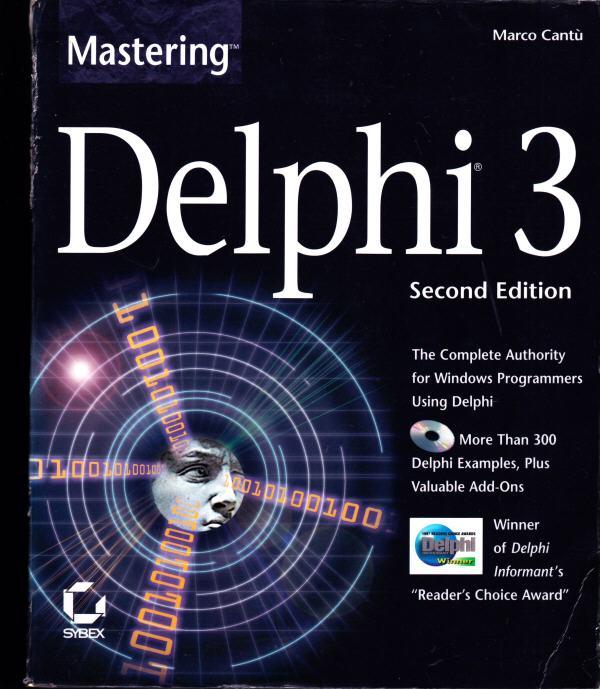
I used Borland Delphi[2] for the computer programs. Of those available, no other compiled computer language matched Delphi’s execution speed, which was essential, considering the enormous number of combinations involved in analyses and simulations. The books below have been invaluable to me while developing my computer software.

My project is taking a long time to complete. Long periods of inactivity have punctuated sporadic bouts of concentrated effort. I hope you like the eventual result; this blog gives you a glimpse. I want to set a standard against which others will be compared.
Notes
- [1] Some people dispute whether this is a real prize! It seems little more than a sop to players to give the illusion of a better chance of winning when the odds of winning a cash prize have worsened.
- [2] Borland Delphi uses the Object Pascal language. Embarcadero now own Borland.
Revision date: 16 November 2022